Networking and Network Systems Installation
Explore the fundamentals of hardware connectivity and infrastructure setup while targeting professional network engineering and system installation skills.

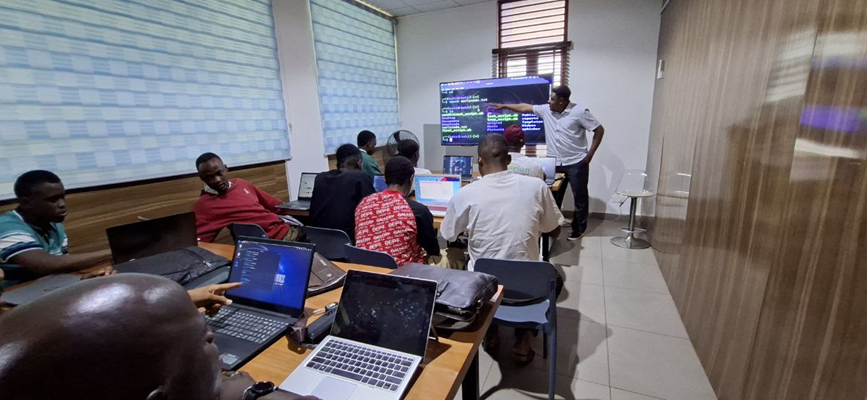
The course Networking and Network Systems Installations is a comprehensive 3-month program in a high-demand role that provides you with real-world experience, helping you master essential tech infrastructure and providing practical, hands-on skills in crucial areas. You will learn computer and printer networking and installation, covering everything from network fundamentals (topologies, IP configurations, and networking devices such as routers, switches, and hubs) to setting up shared printing environments. You also get to gain expertise in intercom installation, enabling you to implement effective internal communication systems. You will also master CCTV and IP camera installation, including configuration of surveillance systems and remote viewing. This affects all areas, such as residential, commercial, and industrial environments.
- Fee
- ₦215,000
- Format
- On-Site
- Course code
- NT400
- Frequency
- 3 days weekly
- Session
- 2 hours per session
Upcoming batches
Physical instructor
Learn with peers
Milestone projects
Accreditation backed
Welcome to Networking and Network Systems Installation Training
Skill Relevance
The ongoing surge in cloud adoption and hybrid IT environments has made network engineering more critical than ever. The labor market reflects this critical demand with compelling statistical evidence. Industry analysts project more than 1.2 million unfilled network engineering roles globally in 2025, highlighting a massive talent gap.
According to the U.S. Bureau of Labor Statistics (BLS), employment of network engineers is projected to grow by 12% from 2024 to 2034, a pace much faster than the average for all occupations. Professionals who invest in these skills and pursue advanced certifications, such as CCNP, see an average salary increase of 10 to 20%, validating their expertise for high-growth roles like Cloud Network Engineer and Security-Focused Network Engineer.
Key Benefits

You will gain in-demand skills, learning networking fundamentals, protocols, and installation techniques, VSS (CCTV Installations), and PABX (Intercoms installations) to boost your IT career.
The hands-on, practical experience on projects will provide you with experience with network devices and enhanced troubleshooting, giving you the confidence to configure, deploy, and maintain important network devices such as routers, switches, and hubs. You will also develop the right skills to identify and resolve network and installation issues efficiently.
With the PABX training, you will learn to configure, install, and maintain a private telephone switching system that routes incoming and outgoing calls within medium to large organizations (like a company or call center).
Furthermore, you learn to install CCTV cameras, their features, the proper positioning of these recording devices in a secure, easily accessible location to ensure optimal viewing and response times during security events, best practices, and implementing robust access control measures to protect against common threats and technical vulnerabilities.

Completing this training will significantly increase your professional skills, positioning you for high-value roles such as network administrator, network engineer, CCTV operator, IT support specialist, etc. The overall aim is to provide you with comprehensive knowledge that covers topics like network topologies, media types, devices, and protocols, setting you up for long-term career growth in the essential field of Networking and connectivity.
Key Modules and Packages
LAN
LAN(Local Area Network): Networking is the study and practice of how computers and devices connect and communicate, that is, share data, information, and resources. This covers the fundamentals of network types, network devices, communication protocols, and data transmission across a network. A network that connects computers and devices within a small geographic area, such as an office or school. It enables the sharing of files, printers, and internet connections. In this course, you will learn to plan network designs and use hardware components, such as modems, routers, switches, and Ethernet cables (RJ45), to connect these LAN devices, verify, configure (firewalls), and share resources across the entire network and devices.
PABX
PABX(Private Automatic Branch Exchange): A PABX is a private telephone switching system that routes incoming and outgoing calls within medium to large organizations (like a company or call center). The lessons involve physically connecting telephone lines, linking phones to the PABX, and powering on the system. In the configuration, you will learn the required programming to manage extensions, call routing, and other features on the system, with specific steps for both traditional and VoIP PABX systems. Finally, you will perform thorough testing to ensure all features work correctly. These features include extensions, auto attendant, voicemails, conference calling, and call transfers.
VSS
VSS(Video Surveillance System): A VSS is a security system that uses cameras and monitoring devices to record and monitor activities, such as CCTV systems. You will be taught the types of CCTV cameras, their features, the proper positioning of these recording devices in a secure, easily accessible location to ensure optimal viewing and response times during security events, and the backbone of your CCTV systems, which includes various cables, power supplies, and networking equipment. You will also learn to configure IP cameras, assign network settings, and integrate them into a surveillance system for effective monitoring.
Labour Market Opportunities
Network Engineer
The role of a network engineer includes designing, implementing, and optimizing network architecture for an organisation. They are often involved in project-based work to build and expand the network. They plan network layouts, configure hardware like routers and switches, and install security measures such as firewalls. Network engineers are also responsible for troubleshooting issues, optimizing performance, and ensuring network security against cyber threats. This role can also be known as a Network Administrator and a Network Technician.
Network Consultant
The role of a network consultant is to provide expert advice on network design, implementation, and optimization for the client. They assess existing systems, identify weaknesses, and recommend solutions to improve performance, security, and scalability, often working with clients on a project basis. Their role includes tasks like troubleshooting, installing hardware, providing user support, and advising on network strategy.
Field Service Engineer
A field service engineer is a professional who travels to client locations to install, maintain, troubleshoot, and repair equipment and network systems. They act as on-site technical experts, diagnosing problems, performing necessary fixes, and providing customer training to ensure equipment operates correctly. These engineers are crucial for customer support, often working with a variety of clients across different industries.
Telecommunication Installer
A telecommunication installer installs and maintains telecommunication equipment, including PABX systems, phone lines, network infrastructure, or cabling. They ensure proper installation, configure systems, and troubleshoot issues to ensure reliable communication services within an organization. These individuals can work in various locations, from home offices and businesses to large data centers, to ensure the physical infrastructure for communication systems is functional.
CCTV Installation Engineer
A CCTV Installation Engineer installs, configures, and maintains CCTV cameras, NVRs, and network devices. They ensure proper placement and layouts of the camera, run wires, connect equipment, focus, and functionality of cameras, and troubleshoot issues affecting monitoring to detect and mitigate security and crime threats. The skills required for this are technical, problem-solving, Attention to detail, and continuous learning.
CCTV Operator
A CCTV Operator is a security professional who monitors live CCTV footage and records surveillance footage from a control room to respond to incidents and ensure the safety and security of any location. They manage and monitor surveillance systems, live feeds, and report incidents to respond to security breaches. They also maintain logs of any incidents or reports that may have occurred.
Who Should Attend
Individuals interested in hands-on cabling, installations, and network setup
This focuses on the physical layer of connectivity, teaching you the art of structured cabling and hardware mounting. You will gain practical experience in crimping, testing cables, and physically configuring routers and switches for optimal signal strength. By the end, you will have the 'boots-on-the-ground' expertise to build a reliable network infrastructure from scratch.
Aspiring network engineers and field technicians
For those aiming for a career in infrastructure, this module bridges the gap between theoretical protocols and real-world deployment. You will learn how to design scalable network topologies and troubleshoot connectivity issues using industry-standard diagnostic tools. This training provides the technical rigor needed to manage complex systems and excel in high-demand field engineering roles.
ICT personnel in schools, churches, SMEs, or corporate environments
This section is tailored for professionals responsible for maintaining uptime in diverse organizational settings. You will master the skills to manage multi-user environments, secure local area networks (LANs), and ensure seamless internet distribution across large buildings. It empowers you to take full control of your organization’s IT assets, reducing the need for external contractors.
People preparing for infrastructure-related roles
This course prepares you for the specific challenges of enterprise-level deployments, focusing on server rack management and network security. You will learn the best practices for labeling, documentation, and hardware maintenance that define a professional infrastructure specialist. It is the perfect preparation for landing roles in data centers, telecommunications, or large-scale IT project management.
Frequently Asked Questions
In the Network & Network Systems Installation course, you will learn how to set up and manage networks, intercom systems, and CCTV/IP cameras. You will learn how these systems work and how to install and troubleshoot them.
Yes. The training covers remote viewing setup, enabling you to configure cameras for monitoring through mobile devices and computers.
You can work as a network technician, CCTV installer, intercom technician, or technical support specialist. You can also offer freelance installation services.