Ad by early code
Master Web Development in Abuja
Early Code Institute offers hands-on front-end and full-stack software development training designed for aspiring developers and tech professionals.
Front End And Full Stack Web Development: Choosing The Right Career Path
Simon Joseph Uche - Published November 13, 2026
Web development is one of the major areas of the technology industry, offering opportunities for people interested in building web applications. As businesses, organisations, and individuals continue to establish their presence online, the demand for functional, user-friendly, and well-designed websites remains important. Explore our comprehensive Early Code Programs Overview to get started.
For beginners who want to enter the technology industry, front-end and full-stack web development are two career paths worth considering. Both involve building websites and web applications, but they differ in the areas of development they cover, the technologies they use, and the responsibilities assigned to developers. Check out our front-end course Front End Course Early Code.
Understanding these differences can help aspiring developers choose a suitable learning path. Whether someone is interested in designing website interfaces or managing the entire development process, learning the fundamentals of web development provides a foundation for building a career in the field.
This program wasn't just about training but about understanding how developers build real-world applications. Access learning tracks through our Web Development Training in Abuja.
Understanding FRONT END AND FULL STACK WEB DEVELOPMENT
Front-end web development focuses on the parts of a website or web application that users see and interact with. It involves creating website layout, navigation menus, buttons, forms, and other interface elements that make the website functional and easy to use.
A front-end developer is responsible for ensuring that a website looks good, responds correctly to user actions, and works across different devices and screen sizes. For example, when a user visits an online shopping website and interacts with product images, search bars, or shopping cart buttons, the front end is responsible for those visible interactions.
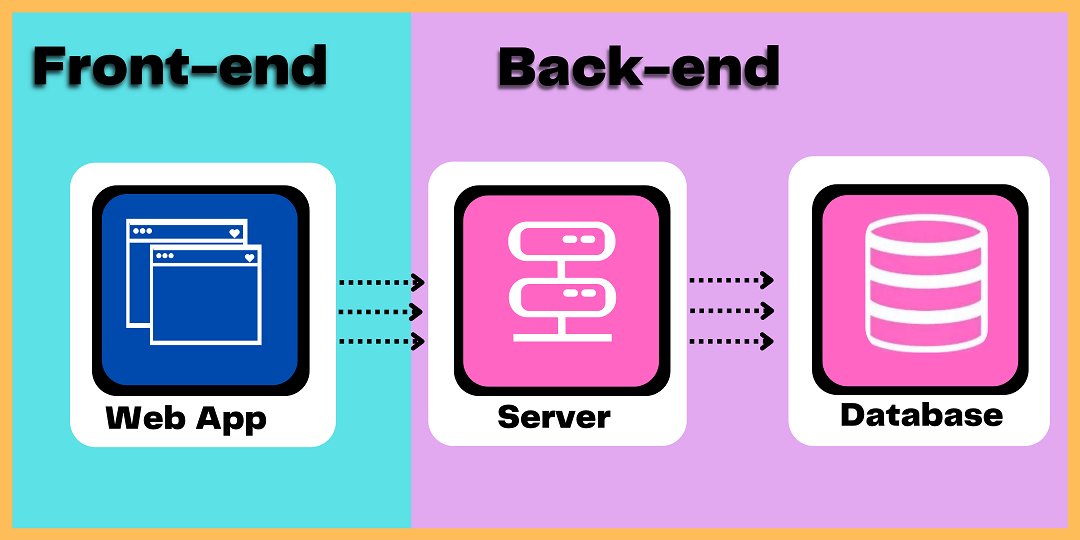
A full stack web developer covers both front-end and back-end development. A full stack developer works on the user-facing interface and the server-side systems that support the application.
The back end handles processes such as storing information, managing user accounts, processing requests, and communicating with the database, and ensures that the different parts work together .
For example, when a user creates an account on a website, the front end provides the registration form, while the back end processes the submitted information and stores the necessary data.
Advance Your Career with Software Training in Abuja

Nyanya Learning Center
Services: Trainings, Mentorship, SIWES Placement, and Internship
Key Differences Between Front-End Developer and Full-Stack Developer
Although front end developer and full stack developer works within the same field, their responsibilities and areas of expertise are different.
| Front End Developer | Full Stack Developer |
|---|---|
| Scope of work: Focuses on the user interface and user experience of websites. Translates designs into functional web pages and ensures users can interact with the website effectively. | Scope of work: Works on both front-end and back-end development, including interfaces, server-side code, databases, and application components. |
| Technologies used: Commonly uses HTML, CSS, and JAVASCRIPT, alongside frameworks such as React | Technologies used: Uses front-end technologies alongside back-end tools and languages such as Node.js, Python, PHP, Java, and SQL. |
| Database and server management: Generally focuses on presenting information and handling user interactions within the browser rather than managing databases or server logic. | Database and server management: May create and manage databases, develop APIs, handle server-side processes, and connect the front end to the back end |
| Project responsibilities: Often collaborates with UI/UX designers and back-end developers to build the user-facing parts of an application. | Project responsibilities: Can contribute to multiple stages of a project, from interface development to server and database management. Responsibilities depend on the organization and project. |
Essential Skills And Technologies
The skills you need depend on the path you choose, but both routes rest on the same web development fundamentals.
- HTML, CSS, and JavaScript: HTML gives a web page its structure, CSS controls how it looks, and JavaScript makes it interactive. These three form the foundation of front-end development. Before moving on to frameworks, beginners should be comfortable building pages, styling layouts, and using JavaScript to handle user actions.
- Responsive web design: Websites need to adjust to different screens, including phones, tablets, and desktops. Developers use CSS tools such as flexbox, grid, and media queries to do this. People browse on all kinds of devices, so this skill matters.
- Back end programming: Full-stack developers need to understand how server-side applications work, which means learning a language or environment for handling requests, processing data, and running application logic. Node.js is a common choice because it lets you keep using JavaScript. Python with Django or Flask and PHP with Laravel are other popular options.
- Database management: Databases hold information such as customer details, user accounts, product records, and transactions. Full stack developers should know how to create, retrieve, update, and delete data. MySQL and PostgreSQL are common choices.
- APIs and version control: Applications programming interfaces let different software systems communicate. Developers use them to connect websites to services like payment systems, authentication tools, and external data sources. Version control tools like Git, along with platforms like GitHub, help developers track changes to their code, collaborate, and manage projects.
Acquiring professional full-stack and front-end software development skills significantly boosts employability and accelerates career advancement in the global digital economy.- World Bank Global Skills Development Report
Career Paths For Front End And Full Stack Developers In Nigeria
Solid technical skills and hands-on experience can open several doors:
- Front end developer: designs and builds the visual user interface of websites and applications. Typical employers include tech startups, digital marketing agencies, software firms, and large companies.
- Full stack developer: handles both client side and server side work. Being able to do both makes full stack developers valuable to teams that need flexible contributors.
- General web developer: creates and updates website for companies or individuals. Some roles focus only on the front end, while others cover the whole build.
- Freelance web developer: works independently, building custom sites, online stores, and web applications for clients. Freelancers find work through personal networks, referrals, direct outreach, and freelance platforms. A strong portfolio of finished projects is the best way to attract clients.
- Software developer: If web developers want to go deeper and improve their coding skills, they can become developers for general software development. They can work on complex applications, APIs, databases, managing large systems, etc.
Choosing A Learning Path That Matches Your Goals
If you like to work on the interface, then it makes sense to start with front-end. If you want to make complete applications and work with databases and servers, then full stack is the long-term goal.
In any case, you have to learn, solve problems, and practice. And the most important thing is to start with the basics and grow from there. Practice daily challenges via the PVC Courses Hub.
"Front end and full stack are both great career paths for people who love developing websites and digital apps. While front-end developers focus on the user experience, the visible and interactive elements, full-stack developers work on both the interface and backend and server logic that runs the UI."
For aspiring developers in Nigeria, understanding this difference makes it easier to choose a learning path and set clear goals. Getting comfortable with HTML, CSS, TypeScript, and responsive design gives you a strong base to build on.
Whichever track you pick, keep learning, build real projects, and put together a clean, well-organised portfolio. Those habits will do the most to help you land a tech role. Explore our broader offerings via the Hands-on Technical Training Programs in Abuja.
Published by Early Code InstituteProfessional Tech School & Software Training Center, Abuja, Nigeria
Official Portal: earlycode.net
Author's Bio

Simon Joseph Uche
Content Developer (web articles)I am Simon Joseph Uche, a Full Stack Web Developer and Content Developer at Early Code Institute. I am responsible for building and maintaining responsive websites and developing engaging web articles and content for the institute's platforms. I focus on clean code, clear content, and user-friendly website experiences, using modern technologies like JavaScript, React, and Next.js.