Ad by early code
Data Science & Python Training
Early Code Ltd facilitates comprehensive data science, Python programming, and database integration training in Abuja.
From Python Code To MySQL Database: Create Your First Data Bridge
Simon Joseph Uche - Published October 30, 2026
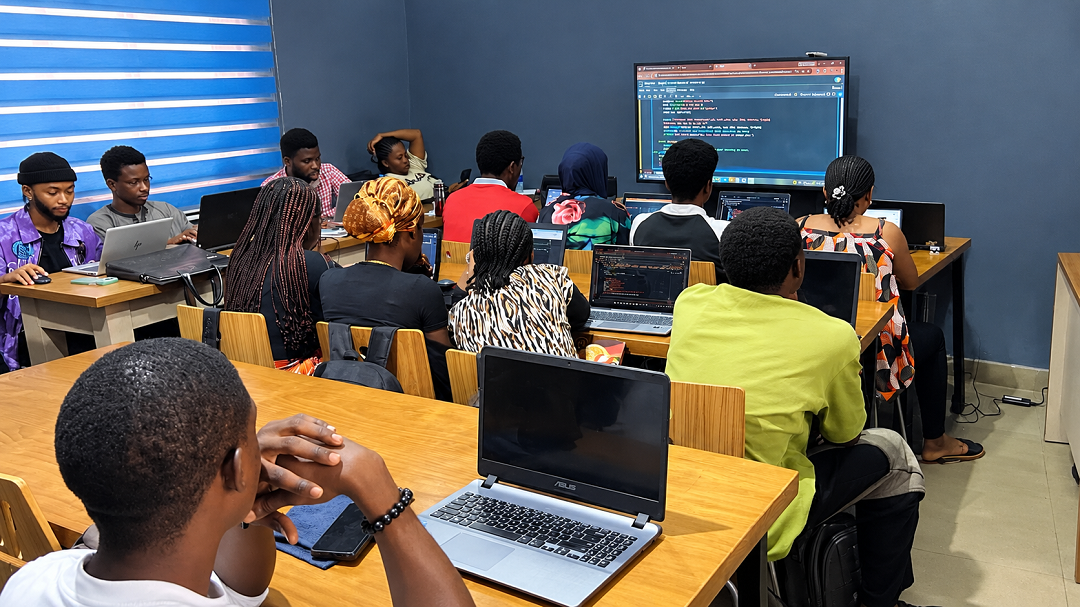
Data science is often taught in various ways, such as physical meetings like classes, tutorials on important concepts in python, machine learning, and data visualization.But in practice, Data always comes from somewhere, which is the database; then it gets cleaned and explored, gets fed into a model, and eventually ends up in an environment to be interactive with users through an app. Understanding this full journey,rather than just isolated skills, is what actually prepares a beginner to work like a data scientist.
This article breaks down the path based on a realistic beginner journey starting with python fundamentals, connecting to a MySQL database, cleaning and visualizing patterns and relationship in data, then going further to build machine learning models and finally deploying this models in an app through Streamlit and GitHub to make it interactive. Explore our Early Code Programs Overview to see all available learning tracks.
Starting with python fundamentals
Before any python advanced steps make sense, beginners need to understand core Python concepts, such as variables, data types, loops, functions,conditional statements,and basic operators.Jupyter Notebook is one of the best environments to learn these key concepts. The interface gives you access to write code in a cell and see the immediate output. This matters especially when dealing with data, where you need to see the immediate changes that have been made to the dataset instead of running an entire operation blindly.
This stage doesn’t need to be mastered completely before moving forward. What matters is being able to write short blocks of code and understand why we write this code and what it does.Also, be able to read error messages without getting stuck. The confidence that comes from being able to write code and fix errors is what makes the rest of the pathway approachable.
Advance Your Career with Corporate Tech Training in Abuja

Nyanya Learning Center
Services: Trainings, Mentorship, SIWES Placement, and Internship
Connection between Python and Database
After understanding how systems are built with Python,beginners need to learn what data is, where it's stored, and how to retrieve it. Data is stored in a database; to access these databases, we need a language that can communicate with a database. That’s where SQL(Structured Query Language) comes into play. Also, we need a Database Management System to be able to write the Language; examples are MySQL, Postgres, Oracle, and many more. MySQL is a suitable DBMS for beginners who are new to databases because it is beginner-friendly. Review database specs at MySQL Official Documentation.
The connection is built using libraries such as mysql-connector or pymysql. The flow consists of the following:importing libraries,filling in credentials (host, port, password, database name), running a query, fetching the results, and closing the connection. The benefit of this is that MySQL is built to store, organize, and retrieve data.Python can be used as a system to interact with users and extract information that will be stored in MySQL as a database. Learning to bridge them is what allows a beginner to understand how data is being formed, preserved, and retrieved. Verify your enrollment status on Early Code Verification.
Data Preprocessing and Visualization
Being able to create and get data is just one stage; beginners need to understand how they can perform the following, such as:
- Load Data into Python
- To check and handle missing Values
- Fixing wrong data types and renaming columns so they’re clear and consistent
- Handle duplicate values
These are some of the processes that should be carried out by a beginner to ensure the data is in the right format suitable for the next stage. This stage is less about complex code but more about data arrangement and suitable format. After cleaning,Visualization comes into play. Nowadays,data is generated frequently, and just having them is not enough; rather, understanding the stories hidden is of high importance. In Python, we will use libraries such as matplotlib, plotly, and seaborn to convert raw data into diagrams to identify hidden patterns and relationships. Apart from Python,Business intelligence tools such as Excel, Power Bi and Tableau are suitable for building interactive dashboards for stakeholders to explore. Explore our specialized Data Analysis & Power BI Training Programs.
Building and Comparing Machine Learning Models
This is usually where a project moves from “working with data” to actually training models to make properties. Depending on what we intend to achieve, we may predict discrete values (classification) or continuous values (regression), or group values using the data points of each feature without predefined labels (clustering).
A beginner workflow usually involves trying more than one model and comparing performance rather than assuming the first model tried is the best one. For classification or Regression, this involves using algorithms such as Linear Regression, Logistic Regression, or comparing a few different algorithms to see which handles the dataset best. For clustering. Its involves classifying data points with various algorithms into different groups based on how close they are to each other in terms of distances.
The most important part is Evaluation. It’s not enough to just build a model. A beginner needs to check the accuracy and performance of each model using various metrics such as accuracy score r2 score, precision score, and other relevant scores. The metrics generate numbers that which of the models perform best for a specific problem. This comparison step is often where the real learning happens, because it forces a beginner to understand why one model works better than another.
End-to-end data integration pipelines connecting database backends, analytics frameworks, and interactive web deployments are foundational to modern data-driven enterprise workflows.- IEEE Transactions on Big Data
Deploying a Model into an Environment
Once a model is built and tested, leaving it inside a notebook means almost nobody else can use it. This is where a tool like streamlit becomes valuable. Streamlit lets you turn a trained model into an interactive web app without any prior knowledge of HTML, CSS, and JAVASCRIPT. When building your app, it will require a small amount of code. The App function provides a selection menu for users to select inputs, and the mode makes the prediction based on what was given to it. This step matters because it reframes the whole project. Instead of a script that only makes sense to the person who wrote it, it becomes something an actual non-technical user could open and use. That shift, from code to usable tool, is a meaningful part of the data science pathway that’s easy to overlook when starting.. Learn about building standard web application interfaces in our Web Development Course.
Hosting Project Assets On Github
Building an app is only half the picture if nobody else can assess it. Linking the project to GitHub, and in many cases deploying the Streamlit app publicly, is what makes the work genuinely available to others rather than sitting on one personal machine. GitHub also serves as a record of the project: the code, the process, and often the dataset or documentation, which is useful both for other people reviewing the work and for the beginner themselves when looking back on how the project was built.
This final step closes the loop on the pathway: data starts in the database, moves through Python for cleaning and analysis, gets visualized, gets modeled and compared, and finally Becomes something real that other people can open, interact with, and understand.
Common mistake to watch for
- Hardcoding Database Passwords directly into a script instead of keeping them hidden in the system environment variables.
- Skipping Model comparison; this involves settling on the first Model that comes to mind without checking other models in terms of their performance.
- Skipping Data Pre-processing before feeding your algorithms, which will affect the performance of their algorithm.
- Deploying a model in an app without testing it with fresh data, which can lead to excellent performance locally but will perform poorly once deployed to a new environment.
Knowing these ahead of time saves a lot of frustration, since nearly everyone runs into at least one of them early on.
Putting the Whole Pathway Together.
This pathway matters because it reflects what data science looks like outside the classroom exercise; It’s not one skill practiced, each one feeding into the next, ending with something real that will be beneficial to other people. A beginner who understands this full chain, rather than just isolated pieces of it, is in a much better position to keep building on what they know and to take on larger projects with the confidence that every stage,from system setup to database to deployment.
Take your practical training further through our Hands-on Technical Training Programs in Abuja.
Python to MySQL Data Bridge TrainingFacilitated by Early Code Institute, Abuja, Nigeria
Official Website: earlycode.net
Author's Bio

Simon Joseph Uche
Content Developer (web articles)I am Simon Joseph Uche, a Full Stack Web Developer and Content Developer at Early Code Institute. I am responsible for building and maintaining responsive websites and developing engaging web articles and content for the institute's platforms. I focus on clean code, clear content, and user-friendly website experiences, using modern technologies like JavaScript, React, and Next.js.