Ad by early code
Corporate & Individual Digital Skills Training
Early Code Ltd facilitates custom digital marketing, software engineering, and SEO capacity-building programs for organizations and individuals in Abuja.
Learning SEO in Nigeria: Practical Skills and Career Opportunities in 2026
Simon Joseph Uche - Published October 9, 2026
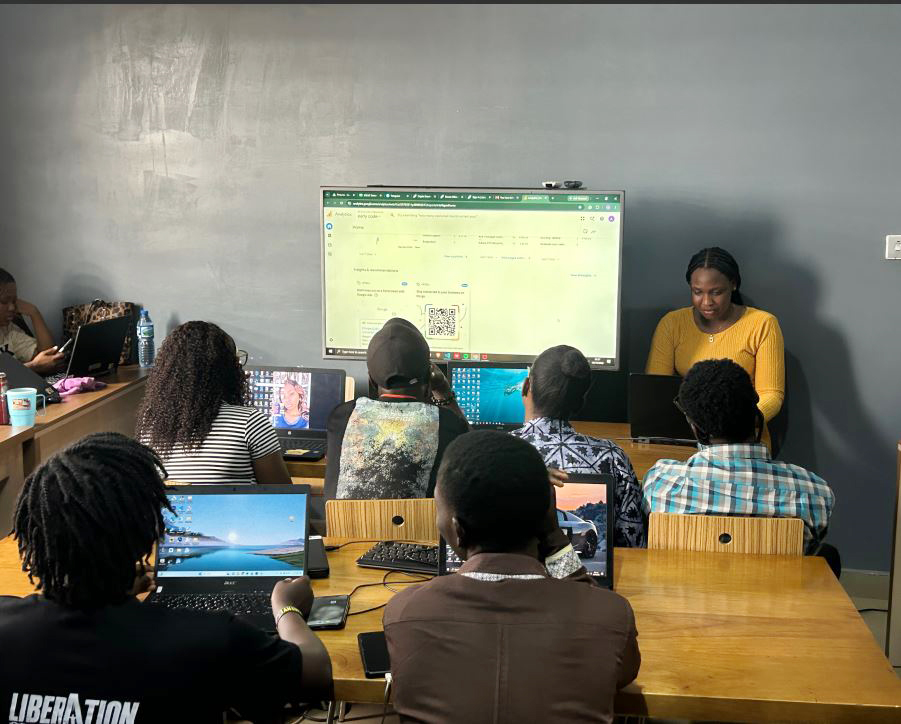
The internet has become an important platform for businesses to attract customers. Whether it is a real estate company in Abuja, a fashion business in Lagos, or an online store serving customers across Nigeria, having a website is not enough. People must be able to find it.
SEO is the process of improving a website so search engines can understand its content and users can discover it through relevant search results. According to Google's SEO Starter Guide, SEO helps search engines understand website content and enables users to find relevant information.
For Nigerians interested in digital marketing, freelancing, web development, or online business, learning SEO can be a valuable investment. This guide explains how to learn SEO, the importance of training in Nigeria, available courses in Abuja, how long learning takes, and how AI is changing the industry.
The Search Engine Optimization
Search Engine Optimization, commonly called SEO, involves improving a website so search engines can crawl, understand, index, and potentially rank its pages for relevant searches.
For example, someone searching Google for "best plumber in Abuja" wants to find a reliable plumbing service. SEO helps businesses improve their chances of appearing in search results when potential customers look for their services.
SEO has several important components:
- Keyword research: Identifying search terms such as "SEO course in Abuja" and "web developer in Nigeria."
- On-page SEO: Optimizing page titles, headings, content, URLs, images, and internal links.
- Technical SEO: Ensuring search engines can access, crawl, and understand a website.
- Content SEO: Creating useful content that answers users' questions.
- Link building: Earning relevant backlinks that help users discover content and may contribute to website authority.
Effective SEO focuses on accessibility, relevance, and useful content rather than shortcuts that promise guaranteed rankings.
The Importance of Learning SEO in Nigeria
As Nigerian businesses increasingly use websites, e-commerce, and digital marketing to reach customers, SEO skills can support different career opportunities.
You could work as an SEO specialist, content writer, digital marketer, technical SEO specialist, local SEO specialist, SEO consultant, or freelance SEO professional.
SEO is also useful for business owners. For example, a cleaning company in Abuja could optimize its website for searches such as "house cleaning services in Abuja" and "office cleaning services in Abuja." This can help the business reach people already searching for those services.
SEO combines marketing, research, content creation, website development, analytics, and customer behaviour. Learning these skills can help you promote your business or provide SEO services to clients.
Master SEO & Practical Digital Skills at Early Code Institute Abuja

Nyanya Learning Center
Services: Trainings, Mentorship, SIWES Placement, and Internship
A Beginner’s Guide to Learning SEO
You do not need to be a professional programmer to start learning SEO. Begin with the fundamentals and gradually develop your practical skills.
Step 1: Understand How Search Engines Work
Learn about crawling, indexing, search intent, ranking, search results, and organic traffic. Search engines discover webpages, process their content, and determine which pages may be relevant to a user's query.
Start with Google's official SEO Starter Guide for a reliable introduction.
Step 2: Learn Keyword Research
Keyword research helps you understand what your audience searches for and why.
Someone searching "What is SEO?" probably wants information, while a person searching "SEO course Abuja price" may be comparing training options. Understanding this difference is called search intent.
Step 3: Learn On-Page SEO
Learn to optimize page titles, meta descriptions, headings, URLs, images, internal links, and content structure.
Use keywords naturally and focus on answering readers' questions. There is no universal word-count target that guarantees high Google rankings. Content should be useful, relevant, and written to satisfy search intent.
Step 4: Learn Technical SEO and Link Building
Technical SEO covers website speed, mobile usability, site structure, XML sitemaps, robots.txt, indexing, canonical URLs, and structured data.
You should also learn link building. Focus on earning relevant, trustworthy backlinks rather than buying large quantities of low-quality links. Tools such as Google Search Console can help you monitor search performance and identify potential website problems.
A more expensive course is not necessarily better. Choose training that fits your budget and provides practical knowledge you can apply.
Sources for SEO Training
You can find SEO training through online learning platforms, digital marketing academies, technology institutes, and professional instructors.
Physical SEO training offers face-to-face explanations, practical exercises, direct interaction with instructors, networking, and guided projects. It may suit learners who prefer structured lessons and immediate feedback.
Online SEO training offers flexibility and may be more convenient for people with busy schedules or limited budgets. Many resources allow you to learn at your own pace.
Beginners can start with free resources before investing in professional training. Regardless of the format, choose a programme with updated materials, practical exercises, and opportunities to work on websites.
| Training Format | Key Features & Characteristics |
|---|---|
| Physical SEO Training | Offers face-to-face explanations, practical exercises, direct interaction with instructors, networking, and guided projects. Best suited for learners who prefer structured lessons and immediate feedback. |
| Online SEO Training | Offers flexibility and convenience for people with busy schedules or limited budgets. Allows learners to study at their own pace. |
Duration for Learning SEO
SEO fundamentals can be learned within weeks, but developing professional expertise may take months or years.
You can begin by learning keyword research, search intent, on-page optimization, backlinks, and technical SEO. Becoming an experienced specialist, however, requires practice in conducting website audits, analysing competitors, optimizing content, diagnosing technical issues, and measuring organic traffic.
You will also learn to use Google Search Console and analytics tools to understand website performance.
Remember that learning SEO and getting SEO results are different timelines. You may understand a technique quickly but need weeks or months to evaluate its impact. Google explains that SEO changes can take different amounts of time to affect search results, and improvements are not guaranteed.
Consistent practice and real website projects are essential to building your skills.
The Use of Artificial Intelligence on SEO
SEO has not been replaced by AI. However, artificial intelligence is changing how professionals research topics, create content, analyse data, and improve search visibility.
AI tools can assist with keyword ideas, content outlines, topic research, editing, competitor analysis, and repetitive tasks. These tools can improve productivity, but they do not eliminate the need for human judgment, accuracy, originality, and audience understanding.
Traditional SEO fundamentals remain important, including helpful content, crawlability, indexing, website usability, and relevant information. As search experiences incorporate AI, with the AI-powered features, SEO professionals understands how users discover information through traditional search results.
AI on SEO serves as a support tool for maintaining content quality and usefulness.
Effective SEO helps search engines understand website content and enables users to discover relevant information. Search engine optimization requires continuous adaptation to quality guidelines and user intent.- Google Search Central Documentation
Essential Topics Covered in a Quality SEO Course
Before enrolling, check whether the curriculum includes these essential topics:
- SEO fundamentals: Crawling, indexing, ranking, and search intent.
- Keyword research: Identifying relevant search terms and understanding competition.
- On-page SEO: Optimizing titles, headings, content, links, and images.
- Technical SEO: Sitemaps, indexing, site structure, and performance.
- Content SEO: Creating useful, original, people-focused content.
- Local SEO: Improving visibility for location-based searches in Abuja, Lagos, and other Nigerian cities.
- Link building: Earning relevant, quality backlinks.
- Google Search Console and analytics: Monitoring clicks, impressions, traffic, and conversions.
- AI and modern search: Using AI tools responsibly to support SEO.
A course that covers only keywords and blog writing may provide an introduction, but broader training can better prepare you for professional SEO work.
SEO training creates opportunities in digital marketing, freelancing, content creation, web development, and online business.
You can begin by investing in a paid SEO course in Nigeria online training, or enrolling in classroom training in Abuja.
There is no magic formula that guarantees the first position on Google. Effective SEO requires patience, consistent practice, and a focus on helping users find valuable information.
Combining structured training, authoritative resources, and practical website projects can help you develop valuable skills as search technology continues to evolve.
Early Code Institute — Practical Vocational CentreTraining Centers in Abuja, Nigeria
Official Portals: earlycode.net |
Author's Bio

Simon Joseph Uche
Content Developer (web articles)I am Simon Joseph Uche, a Full Stack Web Developer and Content Developer at Early Code Institute. I am responsible for building and maintaining responsive websites and developing engaging web articles and content for the institute's platforms. I focus on clean code, clear content, and user-friendly website experiences, using modern technologies like JavaScript, React, and Next.js.