Ad by early code
Empower Your Child with Future-Ready Tech Skills
Early Code Ltd facilitates interactive online and physical coding classes for kids in Abuja and beyond, covering Web Design, Python, and Game Development.
Online Coding Classes for Kids: What Parents Should Look for Before Enrolling
Anna Edeghoghene Enerieta - Published September 18, 2026
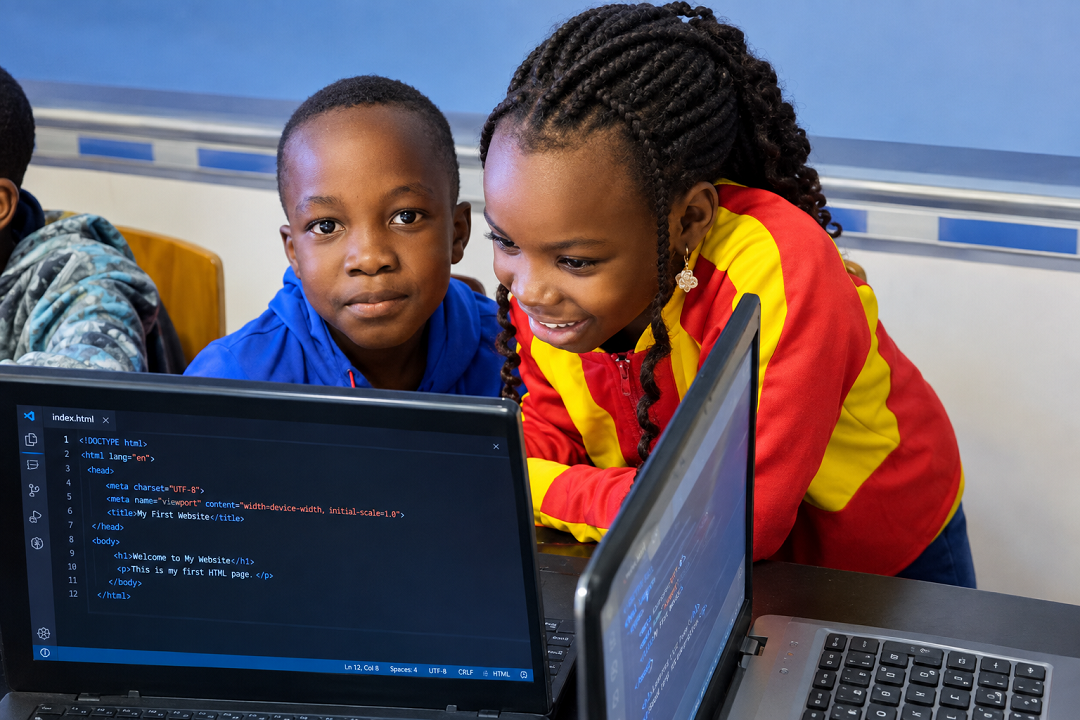
Becoming a digital expert at a young age is one of the most exciting things to do in our fast-evolving world. With technology becoming part of almost everything children will encounter as they grow up, from the way they learn and communicate to the careers they may eventually pursue. Digital skills are becoming increasingly important.
This is one of the reasons many parents are beginning to look beyond traditional school subjects and introducing their children to skills such as coding.
But choosing an online coding class for a child is not as simple as searching for a course and registering. There are many online coding classes for kids available today, and they do not all provide the same learning experience. Some may rely on recorded videos, while others may offer live instruction, practical projects, individual support, and opportunities for children to actually build things.
So, what should a parent look out for before enrolling a child in an online coding class? More importantly, how can you tell whether a coding programme will genuinely help your child learn rather than simply keep them in front of a computer? Explore our specialized Early Code Programs Overview for foundational technical courses tailored for young learners.
Here are some important things to consider.
Look for Live Classes With a Real Tutor
One of the first things parents should consider is how the child will be taught. Children learn differently from adults. When a child is learning something new, especially something as unfamiliar as programming, they may have questions that cannot always be answered by a recorded lesson. They make a mistake in their code, misunderstand an instruction, or simply need someone to explain the concept in another way.
That is why live online coding classes can be valuable. With a live tutor, a child has the opportunity to ask questions, receive explanations, and get guidance while learning. The tutor can observe how the child is progressing and identify areas where additional support may be needed.
This does not mean that recorded lessons have no value. They can be useful for revision and practice. However, parents should be careful about enrolling their children in programmes where watching videos is the main form of learning.
A good online coding class should give the children the feeling that there is an actual teacher guiding them through the learning process.
At PVC, children learn through live classes with human tutors, giving them an opportunity to interact with their instructors during their learning journey. This can make the experience feel more like a real classroom, even though the child is learning from home.
Empower Your Child with Live Tech Training in Abuja & Online

Nyanya Learning Center
Services: Trainings, Mentorship, SIWES Placement, and Internship
Make Sure the Curriculum Is Designed for Children
A common mistake parents can make is assuming that because a course teaches coding, it will automatically be suitable for children. It does not work that way.
Programming can be complicated when it is introduced without considering the learner's age, experience, and ability to understand technical concepts. A curriculum designed for professional developers, for example, may not be appropriate for a child who is just discovering what coding means.
A good coding programme for children with complicated programming terms should break ideas into manageable steps. Children should be able to understand what they are doing, practise it, and gradually move to more challenging concepts. Parents should therefore ask questions such as:
- Is the course suitable for my child's age?
- Is it designed for beginners?
- Does the difficulty increase gradually?
- Are children given practical exercises?
- Will my child actually create projects?
The goal should not simply be for a child to memorise coding commands. The goal is to help them understand how technology works and give them the confidence to use what they have learned.
Choose a Programme That Allows Children to Build Real Projects
Now, imagine your child spends several weeks learning coding but cannot tell you what they have actually created.
That should make you pause.
One of the most exciting parts of learning to code is being able to turn an idea into something that works. A child can write code and eventually see a webpage appear, create an interactive feature, develop a simple game, or build another small project. You can inspect early Web projects standards through official web specifications maintained by the World Wide Web Consortium (W3C).
This is why practical learning matters. Projects also help children understand why they are learning certain concepts. Instead of asking themselves why they are learning programming. They can see how a particular skill contributes to something they are building.
As a parent, this provides something tangible to observe. You can see your child's progress through the project they completed rather than relying only on test scores or certificates.
PVC offers several kid-focused learning paths, including Python Programming for Kids, JavaScript Programming for Kids, Website Design for Kids, and PyGame for Kids. These options allow children to explore coding through different areas depending on their interests. Learn more about foundational web concepts in our Web Development Course.
A child who enjoys games, for example, may become more interested in programming when they discover that they can use code to create simple games.
Pay Attention to Class Size and Individual Attention
Another important question parents should ask is: How many children will be in my child's class?
A child can easily get lost in a very large online class. If dozens of students are attending at the same time, it may be difficult for a tutor to notice when one child is struggling, needs additional explanation, or is simply too shy to ask a question.
Peer to peer interaction can create more opportunities for interaction. A child can ask questions without feeling like they are interrupting the lesson. The tutor can also spend more time coaching learners to understand the difficult concepts and follow their progress throughout the class.
This is particularly important for children who are beginners because they may need more guidance as they get used to programming concepts.
PVC's learning model includes small peer classes, with an average of about five learners, allowing children to learn alongside other students while still receiving personalised attention from their tutor.
However, some parents may prefer an even more personalised experience for their child. In that case, PVC also provides a Private Class Schedule, giving parents the option of enrolling their child for private lessons.
A private class can be especially useful when a parent wants the lessons to be centred around one child's learning pace, questions, and specific areas of interest. It can also be a suitable option for children who learn better with one-on-one attention or require a more flexible arrangement.
For parents, this is worth considering. You are not simply paying for your child to have access to a computer programme. You are investing in a learning experience, and the level of attention your child receives can influence how much they get from that experience.
Early exposure to computational thinking and block/text-based programming enhances problem-solving skills, spatial reasoning, and logical deduction in primary and secondary school learners.- UNESCO International Bureau of Education
Consider Flexibility and Support Beyond the Classroom
Children already have school, homework, family activities, and other responsibilities. Their coding classes should fit into their routine rather than create unnecessary pressure.
Before registering your child, find out when classes are held, how often they take place, and whether the schedule works with your family's daily routine. Flexibility can make a significant difference. But there is another issues parent should consider: what happens when the class ends?
A child may understand a lesson while the tutor is present and then become confused when practising alone. Having access to additional learning support can make the process easier.
PVC combines live instruction with an AI Co-Tutor designed to provide learning support outside live sessions. This means children can have another layer of assistance as they practise and work through concepts. Children still benefit from having a real tutor who can explain concepts, correct mistakes, and guide their development.
Think About What Your Child Is Actually Interested In
Not every child will enjoy the same type of coding. One may love creating websites, while another may be interested in games or solving problems with Python. This is why parents should look beyond simply asking which programming language is best. Instead, think about what will keep your child interested and excited to learn. Check out how computational logic is taught step-by-step in our custom Data Analysis & Logic Training Programs.
Coding helps children develop their creativity, patience, logical thinking, and problem-solving skills because they learn by trying, making mistakes, and finding solutions. These skills can remain useful even if your child chooses a completely different career in the future.
At PVC, parents can choose from different kids-focused courses based on their child's interests. The right starting point can make learning feel exciting rather than forced.
Give Your Child a Head Start With PVC
If your child already shows an interest in computers, games, technology, or creating things, this is a good time to introduce them to coding. They do not have to wait until they are older. With the right guidance, children can learn programming in a practical and enjoyable way.
PVC offers online coding classes for kids with live human tutors, small peer classes, flexible learning options, practical courses, and AI-supported learning. Whether your child is interested in Python, JavaScript, Website Design, or Game Development, they can begin exploring technology and learning how to create with it. Give your child the opportunity to start learning today.
Early Code Institute - Kids & Teen Tech AcademyAbuja, Federal Capital Territory, Nigeria
Official Portal: earlycode.net
Author's Bio

Anna Edeghoghene Enerieta
A Technical Writer and PublisherA creative storyteller who brings words and visuals to life, a technical writer who simplifies tech concept through clear, engaging content. With a background in English Education, writes practical guides and articles to help beginners navigate the digital world with confidence.