Ad by early code
Start Coding with Confidence in Abuja
Early Code Institute practical training program where you can build real applications, gain in-demand coding skills that moves your career forward.
Software Development Training Institute in Abuja
Anna Edeghoghene Enerieta - Published Jabuary 17, 2026
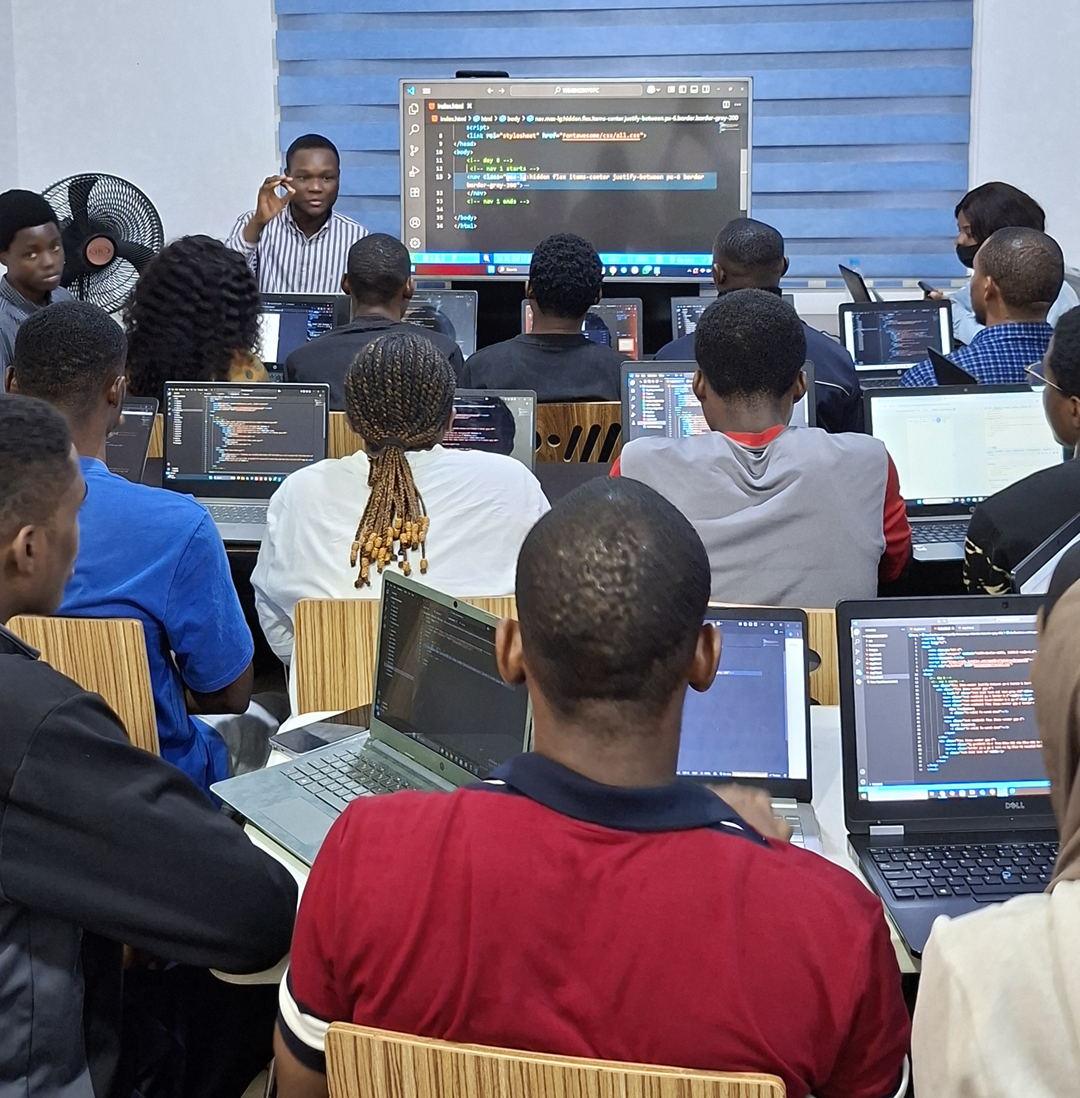
Start your tech career the right way with hands-on software development training at Early Code Institute. Whether you're a beginner or someone looking to switch careers, our program is structured to teach you how to build real applications from scratch using the most in-demand programming tools and technologies
With every digital shift, the need for skilled software developers grows, not only in major tech cities like Lagos but right here in Abuja.
Whether you want to build websites, mobile apps, automation scripts, or even launch your own tech startup, learning software development opens the door to countless possibilities.
The Growing Need for Developers in Abuja
As Abuja continues to grow as Nigeria's center for administration and innovation, companies and institutions in the city are rapidly digitizing their operations.
From Small and Medium Size-Enterprises(SMEs) to banks, NGOs to government agencies, every sector is looking for developers to build, maintain, and improve their digital infrastructure. However, there's still a skill gap and this is where practical training becomes critical.
- Digital Transformation Across All Sectors: Businesses, NGOs, schools, and even government agencies in Abuja are moving operations online. This includes digitizing customer service, payment processing, record-keeping, and internal communications. As a result, there's an urgent need for developers who can build, maintain, and optimize web platforms, mobile apps, and digital solutions.
- Abuja's Rise as a Tech Hub: While Lagos is the country's main tech center, Abuja is fast becoming a digital powerhouse due to its status as the capital and seat of policymaking. With the presence of national regulators, embassies, and NGOs, tech initiatives and innovation hubs are increasingly concentrated here, all needing tech professionals to drive projects.
- Increased Startup and SME Activities: Abuja has seen a rise in small and medium-sized enterprises (SMEs) looking to create custom websites, booking platforms, delivery apps, and customer management tools. These companies require developers to build and maintain scalable software tailored to their niche.
- Remote Work and Global Hiring:With the increase of remote work, developers in Abuja are now competing, and collaborating with the global workforce. Many international companies are outsourcing work to skilled developers in Nigeria, especially in Abuja where English fluency and time zone compatibility are strong assets.
- Shortage of Skilled Developers: Despite the growing demand, there's a noticeable gap between available opportunities and the number of job-ready developers in Abuja. Most graduates from traditional institutions lack practical, project-based coding experience which creates an opportunity for intensive coding programs and practical training institutes like Early Code Institute
A major advantage of live workshops is the opportunity for real-time Q&A, discussions, and hands-on exercises. According to the National Training Laboratories Learning Pyramid, learners retain about 50% of what they learn through group discussions and 75% via practice by doing, compared to just 5-10% through passive reading or videos- LMSPortals
Hands-On Software Development Skill at Early Code Institute

Nyanya Learning Center
Services: Trainings, Mentorship, SIWES Placement, and Internship
Software Development and Programming
Software development is the process of designing, building, testing, and maintaining computer programs or applications. It goes beyond just writing code; it includes understanding a problem, planning how to solve it, building a solution, and improving that solution over time.
Programming is a key part of software development, it's the act of writing the code that tells a computer what to do. Programmers use languages like Python, JavaScript, HTML, CSS, or JavaScrpt to build everything from simple calculators to complex systems like banking apps or social media platforms.
Software development and programming go hand in hand, they're the process and the action behind every app, website, and digital tool we use today. Software development is the bigger picture; it involves planning, designing, building, and maintaining software systems. Programming, on the other hand, is the actual act of writing the code that powers those systems. Together, they turn ideas into working digital solutions.
As businesses in Nigeria and across the world embrace digital transformation, software skills are more valuable than ever. Whether you're building websites, apps, or systems, this skillset puts you in demand and in control of your future.
Stages of Software Development
- Planning: This is where everything starts. You figure out what the software should do, who will use it, and what problems it will solve. It's like drawing your roadmap before you begin the journey. Without proper planning, a project can easily go off track.
- Feasibility Study: At this stage, you ask: “Can we really build this?” You check if the project is possible based on the time, money, tools, and team you have. It helps you avoid wasting time on something that may not work out.
- Design: Once the idea is clear, the next step is to design how the software will look and work. This includes both how users will interact with it and how it will function behind the scenes. Good design makes development easier and the final product more user-friendly.
- Coding: This is the main work of building the software. Developers write the actual code that brings the design to life. It's where creativity meets logic, turning ideas into working programs.
- Testing: After coding, the software is tested to make sure it works well. This step helps find and fix bugs, check for errors, and make sure everything runs smoothly before it gets to users.
- Deployment: Once testing is done, the software is released for people to use. It could go live on a website, app store, or company system. This step makes all the work finally visible and usable to the world.
- Maintenance: Even after launch, the software still needs attention. You'll have to fix bugs, improve features, and keep things up to date. Think of it like taking care of a car—you keep it running smoothly over time.
Why Learn Software Development at Early Code Institute?
Early Code Institute is an NBTE-accredited coding training institute renowned for its practical and project-based approach, Early Code Institute has trained over 1500 students, equipping them with the technical skills needed to excel in this field.
- Project-Based Learning from Day One: We believe the best way to learn software development is by building. From your first week, you will start working on real projects — not imaginary exercises. These include building web pages, creating simple apps, and gradually working up to more advanced tools and techniques. This approach makes learning exciting and helps you retain what you learn by doing, not just watching.
- Personal portfolios and blogs
- Business landing pages
- Online store simulations
- Basic content management systems (CMS)
- Up-to-Date Curriculum with Relevant Tools: Technology changes fast, and our curriculum keeps up. We teach modern tools and languages used in the real world, including:
- HTML, CSS & JavaScript for building beautiful and functional websites
- React JS to create fast, responsive user interfaces
- Next.js for backend logic and server-side functionality
- Firebase for working with modern databases
- Git and GitHub for version control and team collaboration
- Problem-Solving Mindset and Logic Building: Software development is about solving problems. We don't just teach you how to type code, we train you to think like a developer. You'll work on logic challenges, debugging exercises, and real case studies that sharpen your problem-solving skills. This mindset helps you tackle unfamiliar issues and adapt to new tools easily.
- Industry-Experienced Instructors: Our instructors are not just teachers, they are active software engineers and product developers who bring real-world knowledge into the classroom. They share what works in the field, best practices, and how to avoid common mistakes. More importantly, they offer mentorship, helping students align their goals with the realities of the tech industry.
Students at Early Code build:
Software Development Careers You Can Pursue
Once you have the skills, there are many career paths to follow:
- Frontend Developer-Builds the part of the app users interact with.
- Backend Developer-Builds the server and database that power the app.
- Full-Stack Developer-Works on both frontend and backend.
- Mobile App Developer-Builds apps for Android or iOS.
- Software Engineer-Solves technical problems using code.
- QA Tester-Tests software to find and fix bugs.
- DevOps Engineer-Ensures software runs smoothly after release.
How to get started
To start your classes, you will typically need a laptop capable of handling development software, internet access for research, and to access resources provided by Early Code, and finally, dedication and a strong desire to learn, practice, and grow.
Contact the campus representatives to start your classes, which are held physically at specific schedules and are instructor-led. Early Code Institute operates two state-of-the-art physical training centers in Abuja:
Author's Bio

Anna Edeghoghene Enerieta
A Technical Writer and PublisherA creative storyteller who brings words and visuals to life, a technical writer who simplifies tech concept through clear, engaging content. With a background in English Education, writes practical guides and articles to help beginners navigate the digital world with confidence.